NetzPilot
A leakage-safe day-ahead load-forecasting and §14a grid-coordination tool for small municipal utilities — with calibrated P10/P50/P90 uncertainty bands and fair curtailment scheduling.
I build and control smart energy systems — from circuit boards to learning algorithms.
Master's student in Electrical Engineering at Hochschule Bielefeld (HSBI), working where power systems meet machine learning. My focus is making decentralized energy systems — microgrids, distribution networks, and flexible loads — stable, efficient, and trustworthy.
Selected work
Recent work from my Master's studies — spanning applied forecasting software, reinforcement-learning research, and embedded hardware. Each was built and evaluated end to end.
A leakage-safe day-ahead load-forecasting and §14a grid-coordination tool for small municipal utilities — with calibrated P10/P50/P90 uncertainty bands and fair curtailment scheduling.
Four cooperative policies stabilise a simulated 5.5 V DC microgrid without a forecast — released as the final Phase 6 T7/G8 result bundle with scoped caveats.
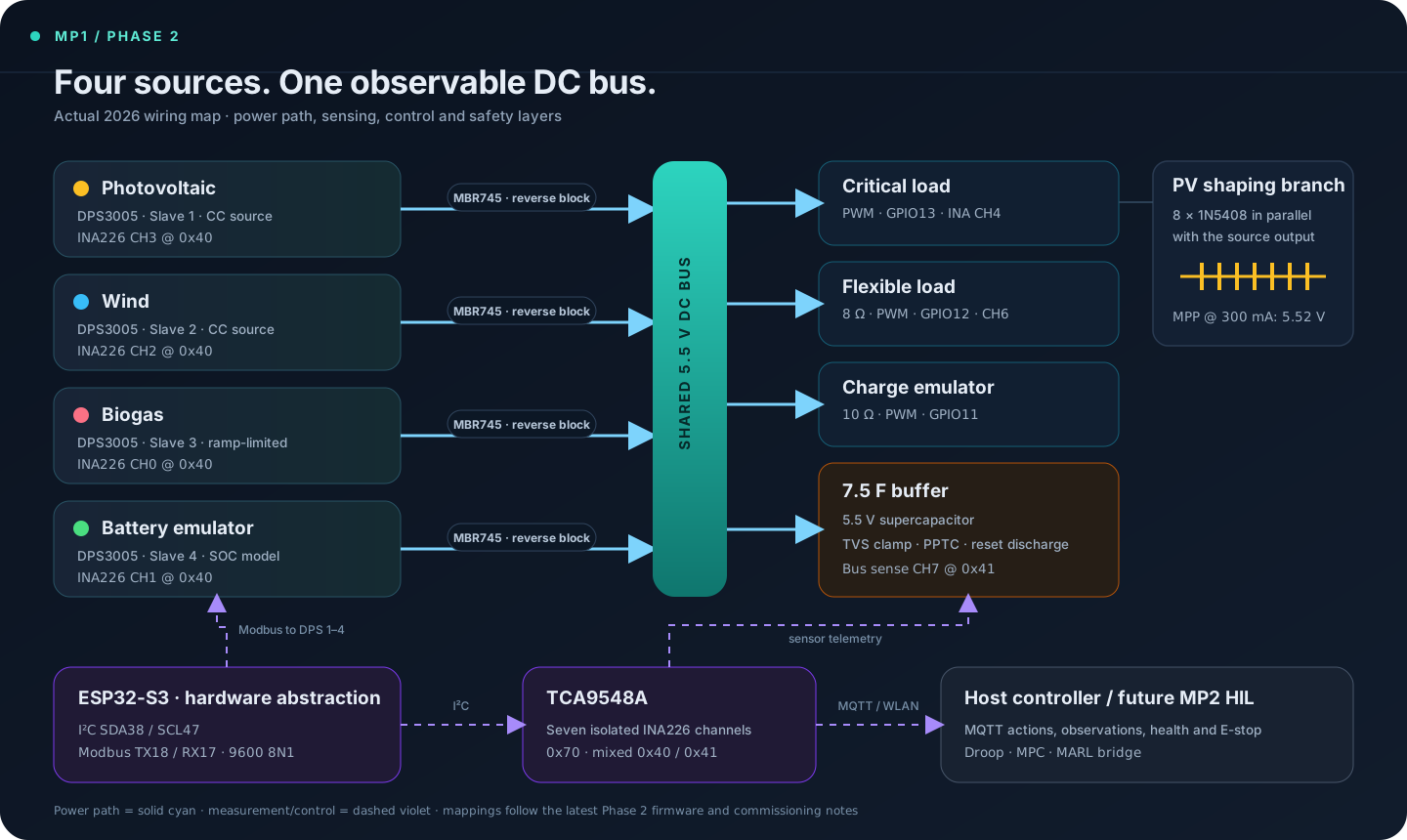
A four-source DC-microgrid testbed with isolated sensing, programmable loads and a measured PV emulator — the physical HIL target for my grid-control work.
An assessment framework that scores the energy resilience of company sites across electricity and heat — built in a three-person team at the Green.OWL Future Energies makeathon, for a challenge set by Energieservice Westfalen Weser. Awarded 2nd place.
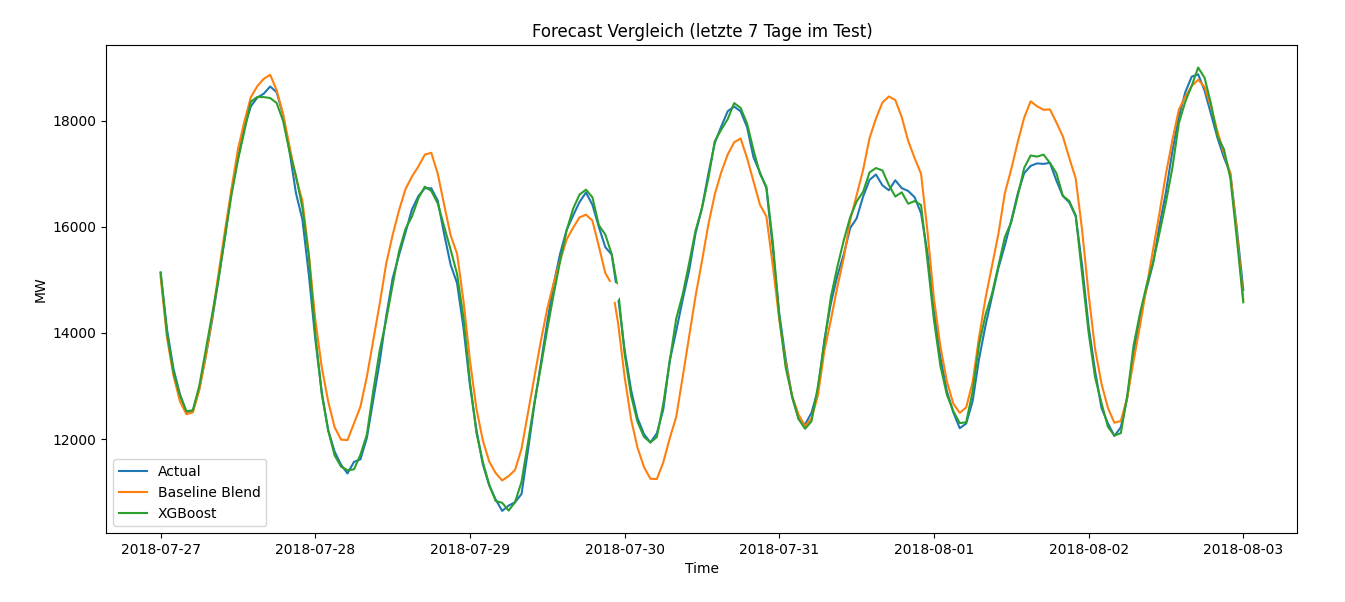
Hourly electricity-load forecasting on the AEP grid region with calendar + lag features and XGBoost — benchmarked against strong naive baselines, with a Streamlit demo.
About · System operator
I'm Amar, a Master's student in Electrical Engineering at Hochschule Bielefeld (HSBI). My work sits at the intersection of power systems and machine learning: taking decentralized energy — rooftop solar, wind, biogas, batteries, flexible loads — and making it behave like one stable, coordinated system.
Over the past year I've built that stack at every layer myself. I designed and wired the physical hardware of a microgrid node, trained the reinforcement-learning controllers that run on it, and developed forecasting software validated on real utility data.
What ties it together is a commitment to rigorous evaluation — honest baselines, calibrated uncertainty, statistical significance, and a willingness to report what didn't work. I'd rather have a result that survives scrutiny than a number that looks good.
Background
For my Bachelor's thesis I developed a resistance-measurement module for an automated electronics test system — comparing measurement methods (four-wire / Kelvin sensing and the Wheatstone bridge), dimensioning the analog signal chain and the microcontroller control logic, and validating the finished module through practical accuracy measurements. Carried out in collaboration with an industry partner.
Interested in my work on smart grids, control, or applied machine learning? I'd be glad to hear from you.